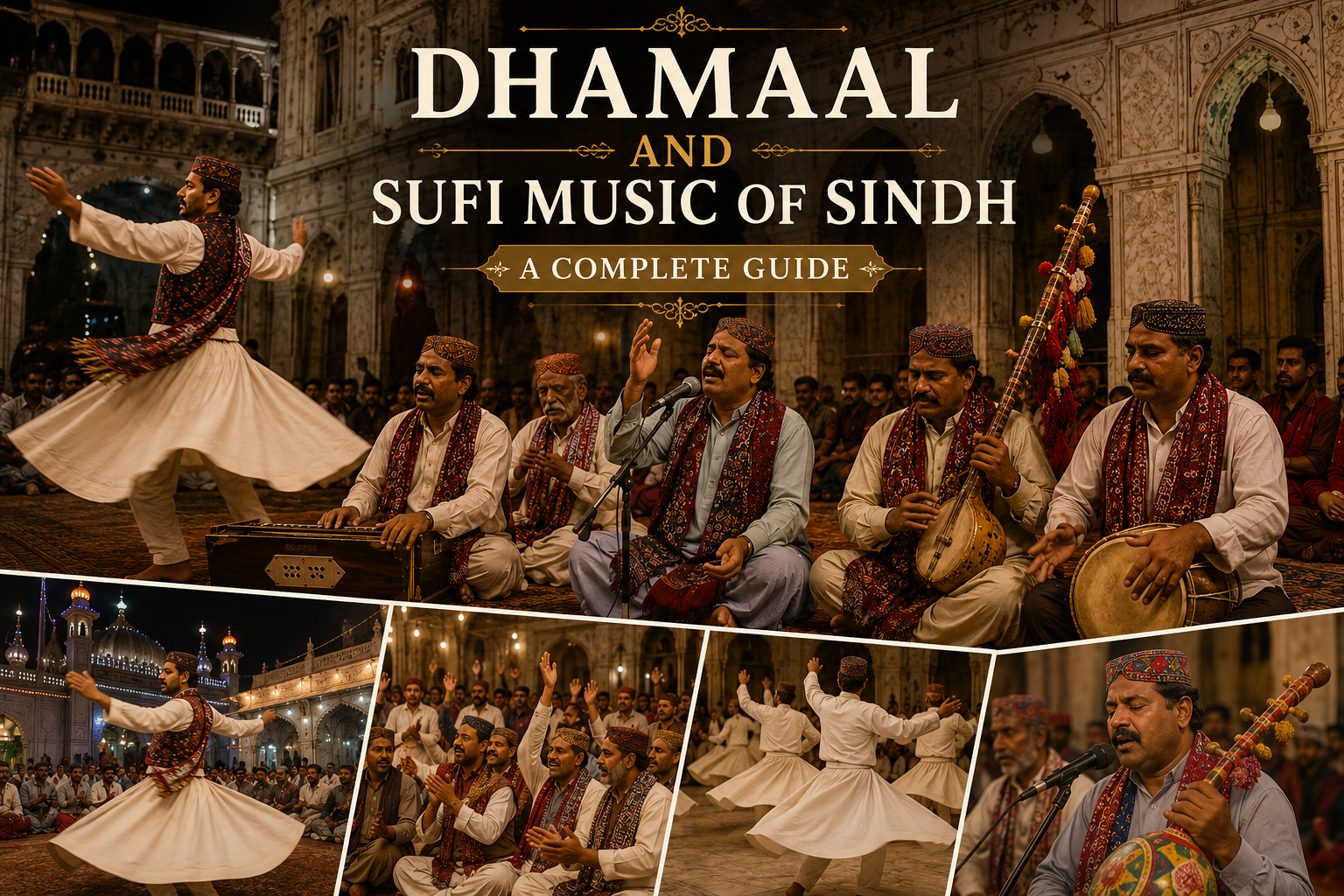
Dhamaal and Sufi Music of Sindh: A Complete Guide
Sufi music is the living sound of Sindh. Great drums beat at the shrines each evening. Faqirs sing verse that is three centuries old. Dancers move until they lose themselves entirely. Singers work in Sindhi, Siraiki and Persian. This tradition carries the poetry the faith and the identity of the province. This guide covers dhamaal and the Sufi music of Sindh. It explains the forms the instruments the performers and where to hear them.
This guide offers a general overview of a living tradition. Practice varies between shrines and regions.
Quick answer: Dhamaal is an ecstatic devotional dance performed to great drums. Sehwan is the most famous place to see it. Faqirs sing the poetry of Shah Abdul Latif Bhittai at Bhit Shah every night. Singers use the tanburo the yaktaro the dholak and the harmonium. Qawwali, kafi and folk forms all feature. The tradition carries the verse of Bhittai, Sachal Sarmast and other Sufi poets.
Place of music in Sindhi Sufism
Music carries the message. Sufi teachers in Sindh used verse and melody to reach people. Written texts served scholars. Song reached everyone else. This choice shaped the whole tradition.
The poets were musicians too. Shah Abdul Latif Bhittai composed in specific musical modes. He is credited with devising an instrument for his verse. His poetry was never meant to be read in silence.
The shrines became concert halls. Devotional music belongs to the tomb of a saint. Performers gather there most evenings. Audiences come to listen and to worship at once.
Dhamaal
Dhamaal is the great ecstatic dance. Devotees move to the beat of large drums. The rhythm starts slowly and builds. Dancers gradually lose awareness of their surroundings.
The drums drive everything. Great kettle drums beat before the shrine. Players strike them with sticks. Their sound carries far across the town. The pulse quickens as the evening deepens.
The dance is a form of worship. Devotees describe it as surrender rather than performance. Many enter a trance like state. Some spin continuously for long periods. Others move with their arms raised.
Sehwan is the home of the dhamaal. The shrine of Lal Shahbaz Qalandar hosts it nightly. Its own dedicated guide covers the saint and the shrine. Other shrines hold the ritual too.
The dance is open to many. Men and women both take part at Sehwan. Transgender devotees have a recognised place there. This openness is unusual and much remarked upon.
The song forms
Kafi is the central form. This short devotional poem sets a single spiritual idea. Singers repeat and elaborate its lines. The form carries much of Sindhi Sufi verse.
Qawwali belongs to the wider tradition. Groups of singers perform in call and response. A lead voice carries the melody. Others answer in chorus. Handclapping drives the rhythm forward.
Faqiri singing serves the Risalo. Groups of devotee musicians perform at Bhit Shah. They sing the verse of Shah Abdul Latif in its proper modes. This practice has continued unbroken for generations.
Folk forms feed the tradition too. Village singers carry the tales of the Seven Queens. Their melodies overlap with the shrine repertoire. The two traditions have shaped one another.
Instruments used for Dhamaal
The tanburo carries the Risalo. This long necked stringed instrument accompanies the faqirs at Bhit Shah. Tradition credits Shah Abdul Latif with developing it. Its drone underpins the singing.
The yaktaro is simpler still. The name means one string. Wandering singers favour it for its portability. Its plain sound suits devotional verse.
Drums set the pulse. Great kettle drums drive the dhamaal. The dholak serves smaller gatherings. Players use their hands rather than sticks on it.
Other instruments join in. The harmonium supports many singers. The alghoza is a paired flute of the region. Small hand cymbals mark the rhythm. Each shrine has its own preferences.
Poets and the repertoire
Shah Abdul Latif Bhittai dominates the repertoire. His Shah Jo Risalo is sung across the province. Its chapters are tied to musical modes. Its own dedicated guide covers the poet.
Sachal Sarmast provides the boldest verse. Singers perform his work in Sindhi and Siraiki. His poetry is more openly ecstatic than that of Bhittai. Its own dedicated guide covers his life.
Older poets feed the tradition. Shah Abdul Karim and others wrote before Bhittai. Their verse survives in performance. The repertoire reaches back several centuries.
Certain songs travel far. A famous Sufi song honours Lal Shahbaz Qalandar. Singers across South Asia have recorded it. It has carried the tradition well beyond Sindh.
Where to hear it
Sehwan offers the dhamaal. Go to the shrine of Lal Shahbaz Qalandar in the evening. The drums begin around dusk. The intensity builds through the night.
Bhit Shah offers the Risalo. Faqirs sing at the shrine of Shah Abdul Latif most nights. The performance is quieter and more contemplative. Many visitors prefer it for that reason.
Daraza offers the verse of Sachal. The shrine lies near Khairpur. Singers perform there especially during the annual festival. Its own dedicated guide covers the site.
The Urs festivals are the peak. Every major shrine holds one each year. Musicians travel from across the province for them. Performances run through the nights. Crowds are enormous.
Listening respectfully
Remember this is worship. The music serves a devotional purpose. Treat performances as you would any religious ritual. Avoid talking during the singing.
Follow the local customs. Dress modestly at every shrine. Remove your shoes where required. Ask before taking photographs or recording.
Offer support if you wish. Many performers depend on donations. Small offerings are customary. Follow the practice of those around you.
Frequently asked questions
What is the dhamaal? Dhamaal is an ecstatic devotional dance performed at Sufi shrines in Sindh. Large kettle drums set the rhythm. Devotees dance as the beat builds through the evening. Many enter a trance like state. Devotees describe it as surrender rather than performance. The shrine of Lal Shahbaz Qalandar at Sehwan is the most famous place to see it.
What instruments are used in Sindhi Sufi music? Several instruments serve the tradition. The tanburo is a long necked stringed instrument used at Bhit Shah. Tradition credits Shah Abdul Latif with developing it. The yaktaro has a single string and suits wandering singers. Great kettle drums drive the dhamaal. The dholak serves smaller gatherings. The harmonium the alghoza and hand cymbals also feature.
What is a kafi? A kafi is a short devotional poem set to music. It usually explores a single spiritual idea. Singers repeat and elaborate its lines through the performance. The form carries much of the Sufi verse of Sindh and the Punjab. Both Shah Abdul Latif Bhittai and Sachal Sarmast wrote in forms performed this way.
Where can I hear Sufi music in Sindh? Sehwan offers dhamaal at the shrine of Lal Shahbaz Qalandar most evenings. Bhit Shah offers faqirs singing the Shah Jo Risalo at the shrine of Shah Abdul Latif. Daraza near Khairpur offers the verse of Sachal Sarmast. The annual Urs festivals at each shrine are the peak of the calendar. Musicians travel from across the province for them.
Is Sufi music the same as qawwali? Qawwali is one form within a wider tradition. It features groups of singers performing in call and response with handclapping. Sindhi Sufi music includes other forms too. The kafi is central to the region. Faqiri singing of the Shah Jo Risalo follows its own conventions. Dhamaal is a danced ritual rather than a song form.
Sound of the province
Sufi music is how Sindh speaks about itself. Its drums have beaten at Sehwan for centuries. Its faqirs have sung the Risalo at Bhit Shah since the 18th century. Its verse belongs to poets who wrote for fishermen and herders. Its dancers surrender themselves entirely at the tombs of saints. No recording quite carries what happens in those courtyards.
You may come for dhamaal at Sehwan or the singing at Bhit Shah. Either will stay with you. You can hear the great drums start as the light goes. You can sit while the faqirs work through the modes of the Risalo. You can watch devotees turn until they forget the crowd. Come in the evening, listen quietly and let it build.