Data Darbar: The Great Sufi Shrine of Lahore
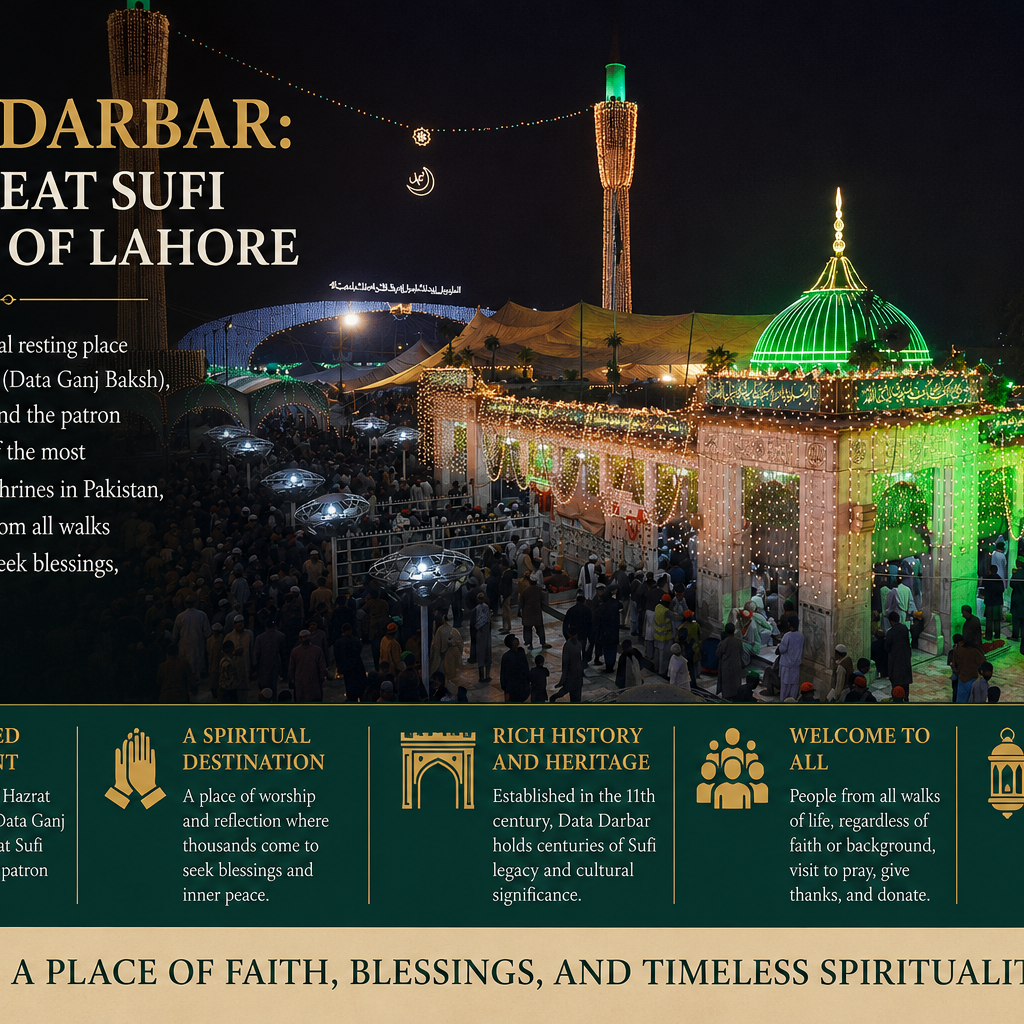
Data Darbar is situated in the heart of the old city outside Bhati gate Lahore. It is the largest Sufi shrine in South Asia. The shrine houses the tomb of Ali Hujwiri, the revered saint known as Data Ganj Bakhsh. He came to Lahore from Ghazni in the eleventh century and is honoured as the patron saint of the city. The shrine draws tens of thousands of visitors each day and up to a million during its annual festival. For anyone getting to know Lahore, Data Darbar is one of the most important spiritual and cultural landmarks in the country.
This guide explains what Data Darbar is, the life of the saint, the history of the shrine and its place in the life of the city. It treats the shrine with respect as a sacred place and describes its practices as its devotees understand them.
Data Darbar
Data Darbar is an Islamic shrine in Lahore. It is the largest Sufi shrine in South Asia. The shrine was built to house the remains of Ali Hujwiri, a Sufi saint of the eleventh century. He is widely known as Data Ganj Bakhsh. Many call him more simply Data Sahib. The shrine is considered the most sacred place in the city and one of the most visited shrines in South Asia.
The shrine is situated in the centre of the old city. It stands on Data Darbar Road, near the Bhati Gate, Gawalmandi and the Lower Mall. The surrounding area stays busy day and night, filled with devotees, scholars and visitors. The shrine complex spans a large area, with courtyards, prayer halls, a mosque and many facilities to serve the crowds of visitors.
The heart of the shrine is the tomb of the saint. The tomb is housed in a Mughal era chamber of carved white marble. A large marble courtyard surrounds the tomb. The central tomb chamber is enclosed by a marble screen and decorated with fine detail. Newer parts of the complex use modern architecture to serve the growing number of visitors. The shrine brings together the old and the new around the resting place of the saint.
Data Darbar is a living centre of devotion. It draws between 30,000 and 60,000 visitors on a normal day. The numbers rise sharply on Thursdays, the traditional night for visiting shrines. They also rise on religious holidays. The shrine is one of the few places in the city where the rich and the poor share the same space. It offers free food to thousands of people each day in a custom that is centuries old. This spirit of service and equality is central to the shrine.
Quick answer: Data Darbar is considered as most important Sufi shrine in South Asia located next to Bhati gate Lahore. It houses the tomb of the saint Ali Hujwiri, known as Data Ganj Bakhsh, who came to Lahore in the eleventh century. The shrine draws tens of thousands of visitors daily and up to a million at its annual urs festival.
Who was Data Ganj Bakhsh?
Ali Hujwiri was a Sufi saint, scholar and preacher of the eleventh century. His full name was Abul Hassan Ali bin Usman al Hujwiri. He is honoured across South Asia as Data Ganj Bakhsh, a title that reflects his reputation for generosity. He is venerated as the patron saint of Lahore. He is one of the most widely respected saints in the whole subcontinent.
He was born in Ghazni, in present day Afghanistan, around the year 990. He came from a respected family. He was a scholar of Islamic law and a Sufi mystic. He travelled widely through the region in search of knowledge, spending time in centres of learning such as Baghdad, Nishapur and Damascus. He met many of the leading Sufis of his time on these journeys. He then settled in Lahore, where he spent the final years of his life.
Ali Hujwiri is remembered above all for his teaching and his writing. He spread his message through preaching and example. Historians describe him as one of the most important figures in the spread of Islam in the subcontinent. His teachings emphasised humility, self purification, compassion and service to others. He is remembered as a man of great learning and kindness who bridged the roles of the scholar and the spiritual seeker.
His most famous work is the Kashf al Mahjub, meaning the Unveiling of the Veiled. It is considered one of the earliest treatises on Sufism written in Persian. The book documents the philosophy and practices of the early Sufi saints. It combines spiritual insight with clear guidance for seekers. The work remains a key text in the study of Islamic mysticism to this day. This writing, alongside his life, is the foundation of his lasting influence.
History of the shrine
The history of Data Darbar dates back nearly a thousand years. The story begins with the arrival of Ali Hujwiri in Lahore in the eleventh century. He built a mosque on what were then the outskirts of the city. He was buried beside this mosque after his death, around 1071 to 1077. His grave marked the beginning of what would become the shrine.
The shrine grew as the reputation of the saint spread. At first the site was a simple grave next to the mosque. Over time it became a focal point for spiritual seekers and pilgrims. By the thirteenth century the belief that the spiritual power of great Sufi saints was tied to their burial places was widespread. A larger shrine was built to commemorate the burial site of the saint. The shrine had become a well established place of pilgrimage.
The shrine received significant patronage over the centuries. During the Mughal era, rulers and nobles expanded the complex. They built the marble mausoleum, expanded the courtyards and added fine decoration in the Mughal style. This period established the shrine as a centre for Sufi learning and gatherings. The shrine and its mosque were rebuilt and expanded again in the following centuries.
The shrine came under government management in the modern era. It became part of the Auqaf foundation under an ordinance of 1960. This brought the shrine under official care, with the aim of preventing the misuse of shrine funds. The complex was greatly expanded in the 1980s, becoming the largest shrine in South Asia. New facilities were added, including a library, a free kitchen and spaces for gatherings. The shrine is now managed by around 200 full time staff and remains under the care of the Auqaf board.
Urs and the practices of the shrine
The shrine is a place of continuous devotion and rich practice. It remains open at all hours and welcomes visitors freely. The five daily prayers, recitations of the Quran and personal supplications take place continuously. The atmosphere of faith and devotion is what draws so many people to the shrine each day.
The annual urs is the greatest event at the shrine. The urs marks the anniversary of the death of the saint, held in the Islamic month of Safar. It is not seen as a time of mourning but as a celebration of the spiritual union of the saint with the Divine. The festival lasts several days. It draws up to a million devotees from across the region. The shrine is illuminated, special prayers are held and vast quantities of free food are served.
Music has a special place in the devotional life of the shrine. Qawwali, the devotional Sufi music, is performed regularly at the shrine. These performances express devotion and love. They create a deeply emotional atmosphere for listeners. On special occasions, musicians perform for hours. This tradition of devotional music is one of the features that many people associate with the shrine.
The langar, the free kitchen of the shrine, is one of its most cherished traditions. Free food is offered to tens of thousands of visitors, in a custom said to be a thousand years old. The langar reflects the teachings of the saint on equality, generosity and service to others. Rich and poor eat together, without distinction. This tradition of service is central to the spirit of the shrine and to the wider values of Sufism that it represents.
Setting and significance in area
Data Darbar is situated in the heart of the old city of Lahore, on Data Darbar Road near the Bhati Gate. Its location makes it one of the historical centers of the city, near the Walled City and its markets. This is a very active place in the city with many worshippers and traders visiting there at any time of the day.
This shrine is extremely important to Lahore and the region at large. It is considered the most sacred place in the city. Ali Hujwiri is venerated as the patron saint of Lahore. The city is sometimes called the City of Saints in part because of him. The shrine has shaped the religious, cultural and spiritual identity of the city for centuries. It has influenced the literature, poetry and music of the region.
The shrine is also a major social and economic centre. This is one of the few spots in the city where people from all walks of life meet together. There are a variety of social services and even food which is offered for free at this place. The shrine draws great numbers of visitors and generates significant activity in the surrounding area. It is the most visited shrine in the country.
The shrine represents values that reach beyond religion for many people. For anyone getting to know Lahore, Data Darbar is one of the landmarks that captures the spiritual heart and the social soul of the city.
Visiting Data Darbar
Data Darbar is one of the most significant places to visit in Lahore. It is a deeply sacred place, so it is best approached with respect for its customs and its devotees.
The shrine is open at all hours, every day of the week. Entry is free. The best times to visit are early in the morning or late in the evening, to avoid the largest crowds. Thursdays and the days of the urs are especially significant but very crowded. As a place of worship, modest dress is expected. Men should wear clothing that covers the arms and legs. Women should cover their heads and dress modestly. Shoes must be removed before entering the shrine, with racks provided. Visitors are asked to behave respectfully and keep quiet near the shrine.
The shrine is reached easily as it is situated in the heart of the old city. It is served by the Bhati Chowk station of the Lahore Metrobus. It is also accessible by taxi, rickshaw and ride hailing service. The surrounding area is busy, so the final approach may be on foot through crowded streets. The shrine is well organised to handle the large numbers of visitors.
The cooler months from around October to March offer the most comfortable time to visit and explore the surrounding area. Despite the heavy crowds, many visitors describe a strong sense of peace at the shrine. A visit combines naturally with the nearby Walled City, the Bhati Gate and the markets of the old city. Visitors are asked to respect the sacred nature of the shrine, follow its customs and be mindful of the devotees who come to worship.
Places near Data Darbar
Data Darbar is situated within reach of many landmarks and useful places in the old city. This helps visitors plan a fuller trip. The Bhati Gate, one of the historic gates of the Walled City, stands close by. The Gawalmandi food street is nearby. The Lower Mall and the colonial buildings of The Mall lie a short distance away.
The Lahore Fort, the Badshahi Mosque and the tomb of Allama Iqbal lie in the Walled City nearby. The Wazir Khan Mosque, the Shahi Hammam and the Sunehri Mosque are within the old city. Minar e Pakistan and the Greater Iqbal Park are a short distance away. Anarkali Bazaar and the Lahore Museum lie towards The Mall. Mayo Hospital, Sir Ganga Ram Hospital and the King Edward Medical University serve the central area. These connections make the shrine an easy part of a tour of historic Lahore.
Frequently asked questions
Where is Data Darbar located? Data Darbar stands in the heart of the old city of Lahore, on Data Darbar Road near the Bhati Gate. It is close to Gawalmandi and the Lower Mall. It is served by the Bhati Chowk station of the Lahore Metrobus.
Who was Data Ganj Bakhsh? Data Ganj Bakhsh was the Sufi saint Ali Hujwiri, born in Ghazni around 990. He was a scholar, mystic and preacher who settled in Lahore in the eleventh century. He is venerated as the patron saint of Lahore and wrote the Kashf al Mahjub, one of the earliest treatises on Sufism.
Why is Data Darbar important? Data Darbar is the largest Sufi shrine in South Asia and the most sacred place in Lahore. It houses the tomb of the patron saint of the city and draws tens of thousands of visitors daily. It is a major spiritual, cultural and social centre.
What is the urs festival? The urs is the annual festival that marks the anniversary of the death of the saint, held in the Islamic month of Safar. It draws up to a million devotees. The festival includes special prayers, devotional qawwali music, illuminations and the serving of free food.
Is Data Darbar open to visitors? Yes. The shrine is open at all hours, every day, with free entry. Modest dress is expected. Shoes must be removed before entering. The best times to visit are early morning or late evening to avoid the largest crowds. Thursdays and urs days are especially crowded.
What is the langar at Data Darbar? The langar is the free kitchen of the shrine. It offers food to tens of thousands of visitors each day. This custom is said to be a thousand years old. It reflects the teachings of the saint on equality, generosity and service, with rich and poor eating together.
Data Darbar is one of the most important spiritual and cultural landmarks of Lahore and the largest Sufi shrine in South Asia. It houses the tomb of Ali Hujwiri, the saint known as Data Ganj Bakhsh, who came to Lahore in the eleventh century and is honoured as the patron saint of the city. His teachings of humility, compassion and service have influenced generations across the region. His famous work the Kashf al Mahjub has done the same.
The shrine is a living centre of devotion, drawing tens of thousands of visitors each day and up to a million at its annual urs. It stands in the heart of the old city, a place where people of all backgrounds gather together, where devotional music fills the air and where free food is served in a custom centuries old. It remains one of the essential landmarks of Lahore and the spiritual heart of the city whether you visit Data Darbar for its spiritual atmosphere, its history or the remarkable spirit of service and equality it represents.