Checklist Before Buying a Plot in Pakistan: Things to Verify
Buying a plot feels simpler than buying a house. There are no walls to inspect, no leaking roofs, no old wiring to worry about. That simplicity fools a lot of people. A plot can carry just as many hidden problems as a built house and some of them are far harder to spot.
The risks with land are mostly about paperwork and ground reality. Is the seller the real owner? Does the plot physically exist where the file says it does? Is the society even approved? Get these wrong and you can lose your money with nothing to show for it.
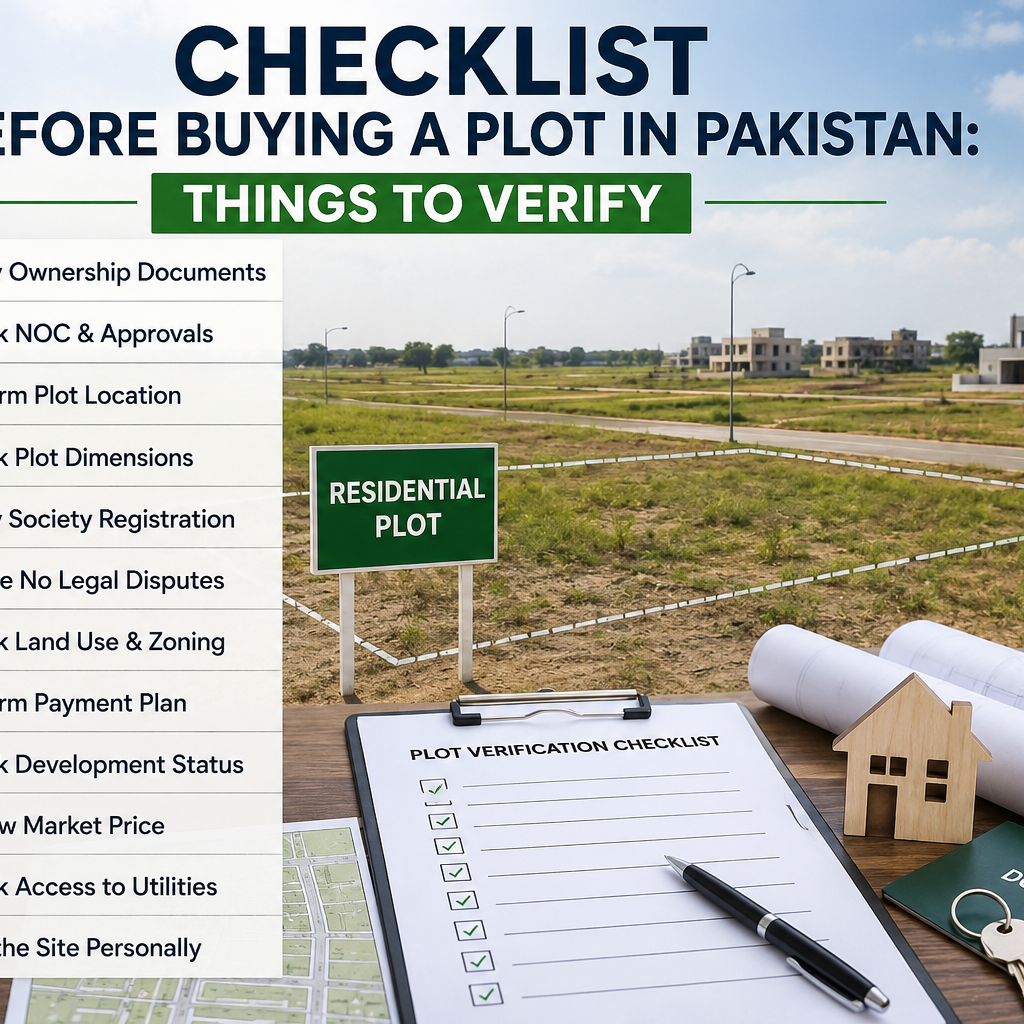
This checklist takes you through what to verify before you pay. Work through it carefully. A plot is a long term commitment and the time you spend now saves a great deal of trouble later.
Confirm who really owns the land
Start with ownership, because nothing else matters if this is wrong.
Ask for the ownership record and check it against the seller's identity. For land held in the general revenue record, the key document is the Fard, which shows the rightful owner. For a plot inside a housing society, the society's own file and allotment record do the same job.
Match the name on the record with the CNIC of the person selling. If a third party is handling the sale, ask on what authority. Sometimes a relative or agent sells without proper standing and that creates a mess you do not want to inherit.
Be extra careful with plots sold through a power of attorney. The document must be valid, specific and genuine. Verify it properly, because forged or expired attorneys are a common route to fraud.
Check that the society is approved
Many people buy plots in housing societies and this is where a lot of money disappears.
A society must be approved by the relevant development authority before it can legally sell plots. In Punjab, that often means approval from the local development authority or the housing authority that governs the area. Other provinces have their own bodies. An unapproved or illegal society can be sealed, demolished or left without basic services for years.
Ask to see the society's approval documents. Confirm that the specific block or phase you are buying in is part of the approved layout. Some societies sell plots in areas that were never sanctioned and those plots can turn out to be worthless.
A quick visit to the development authority's office or its official record, tells you whether the society stands on solid ground. This single check has saved many buyers from disaster.
Verify the plot actually exists on the ground
A file is not a plot. This sounds obvious, yet people pay for plots that exist only on paper.
Go to the site. Find your exact plot number using the society's approved map. Confirm that the plot is marked, that the surrounding roads exist and that the block matches what the file claims. If the area is still raw land with no development, be honest with yourself about how long it might take to become livable.
Watch out for the file only trap. In some new societies, plots are sold as files long before any land is developed. These can be fine as an investment if the society is genuine, but they carry more risk. You are betting on a promise, not a piece of ground you can stand on.
If you cannot locate your plot on site, do not buy until you can.
Look at access, roads and the plot's position
Two plots of the same size can be worth very different amounts and position is a big reason why.
Check the road in front of the plot. A wider main road usually means a higher value, but it can also mean more noise. A corner plot has two open sides, which many buyers prefer, though it can cost more. A plot facing a park, a mosque or a main boulevard each has its own appeal and price.
Look at the level of the land too. A plot that sits low can flood during heavy rain and raising it later costs money. Walk the surrounding streets. See whether the area drains well or whether water collects after rain.
These details shape both your comfort and your resale value, so weigh them before you commit.
Confirm the size and boundaries
Never assume the plot is the size you were told. Measure it or have it measured.
Compare the dimensions on the ground with the dimensions in the documents. Plots are sometimes smaller than claimed or shaped awkwardly in a way that wastes space. An odd shape can make construction harder and more expensive later.
Check the boundaries against the neighbouring plots. Encroachment is a real issue. A neighbour's wall or structure creeping onto your land can spark a dispute that drags on for years. Clear, agreed boundaries from the start prevent that.
If the society has placed boundary stones or markers, confirm they are in the right place.
Check for dues, disputes and dues clearance
A clean plot is one with no baggage attached. Make sure yours is clean.
Ask whether all society dues and development charges have been paid. In many societies, buyers must clear outstanding instalments or development fees before a plot can transfer. If the previous owner left unpaid dues, those can land on you.
Find out whether the plot is caught in any dispute. A plot tied up in a court case, an inheritance fight or a boundary quarrel is best avoided, however attractive the price. Ask directly and check the record for any mortgage or charge against the land.
A property offered far below the going rate should raise a question, not just excitement. Bargains often hide a reason.
Understand the development charges still owed
Buying the plot is only part of the cost. Many societies levy development charges to pay for roads, water, sewerage and electricity.
Find out whether these charges are fully paid or still pending. In some cases a large sum remains owing and the buyer takes that on. Knowing this before you agree a price lets you negotiate properly or budget for it at least.
Ask the society office for a clear statement of what is paid and what is due. Get it in writing if you can. A verbal assurance is worth little when a bill arrives months later.
Think about utilities and services
A plot without services is just dirt. Find out what is actually connected and what is only promised.
Is electricity available in the block? Is there a water supply or will you depend on a borehole? Has the sewerage system been laid? In developed phases of established societies, these are usually in place. In newer phases, they may be years away.
There is nothing wrong with buying in a developing area, as long as you go in with open eyes. Just be clear about how long you might wait before you can build and live comfortably.
Review the transfer process and its costs
Before you finalise anything, understand how the transfer will work.
For a society plot, the transfer happens through the society office. Both parties usually attend with original CNICs and the society issues the transfer in the buyer's name. For land in the revenue record, the process runs through the relevant land record centre, where the mutation and sale deed are recorded.
There are charges at transfer, including society transfer fees and government taxes. The rates change from time to time, so confirm the current position close to your purchase. Knowing the full cost in advance keeps you from being caught short on the day.
Pay the balance in a traceable way, such as a pay order, rather than loose cash. A clear money trail protects you if anything is questioned later.
Make everything in writing
Once you decide to proceed and get the terms down on paper.
A written agreement should state the agreed price, the amount paid as token, the balance due, the date for completing the deal and other condition. It should also spell out what happens if either side backs out. Keep witnesses and make sure both parties sign.
Even with someone you know never rely on trust alone. A clear document protects both sides and removes any room for argument later. Keep copies of every receipt and paper from the first payment onwards.
Get a professional eye on the paperwork
If you are unsure about any document, ask a property lawyer to review it. The fee is small next to the value of the plot and a trained eye catches problems most buyers miss.
A lawyer can confirm the ownership record, check the society's standing and read the agreement for weak spots. For a first time buyer especially, this is money well spent. It turns a nervous guess into a confident decision.
Watch for the common plot scams
Land fraud follows a few familiar patterns. Knowing them helps you spot trouble early.
One is the double sale, where the same plot is sold to two or more buyers. The seller collects from each and disappears, leaving them to fight over a single piece of land. Checking the live ownership record just before transfer, not weeks earlier, reduces this risk.
Another is the fake society, dressed up with grand advertisements and a smart office but no real approval and no developed land. Buyers pay for files that never turn into plots. The defence is simple. Verify the approvals yourself and trust the development authority's record over any brochure.
A third trick involves selling a plot in a sanctioned society but in a block that was never approved. The society name is genuine, so buyers relax. The specific block is not, so the plot is worthless. Always confirm that your exact block and phase sit within the approved layout.
Then there is the inflated file, where a plot file changes hands several times at rising prices with no real demand behind it. The last buyer is often left holding a file no one wants. Judge value by genuine activity in the society, not by the story a dealer tells.
A note on investment plots
Many people buy plots not to build, but to sell later at a profit. That is a fair plan, but it changes what you should check.
For an investment plot, the society's reputation and future prospects matter most. A genuine, approved society in a growing area tends to hold and gain value. A risky society in a far flung location may never deliver. Look at how the society has performed so far, whether it completes its promises and whether demand for its plots is real.
Avoid putting money into societies that exist only in advertisements. If the development is not visible on the ground and the approvals are not in place, the file you buy may never become a plot.
Final thoughts
A plot can be a sound purchase or an expensive lesson and the difference usually comes down to checking. Confirm the ownership. Confirm the society is approved. Stand on the actual plot and match it to the file. Clear the dues, settle the boundaries and put the deal in writing.
None of this is complicated, but all of it takes patience. Sellers may push you to hurry and the fear of missing out is real. Resist it. A plot will still be there next week and the few days you spend verifying everything are the cheapest insurance you will ever buy.
Get these checks right and you can hand over your money knowing exactly what you are getting. That confidence is worth far more than the time it takes to earn it.