Chakwal: A Complete Guide
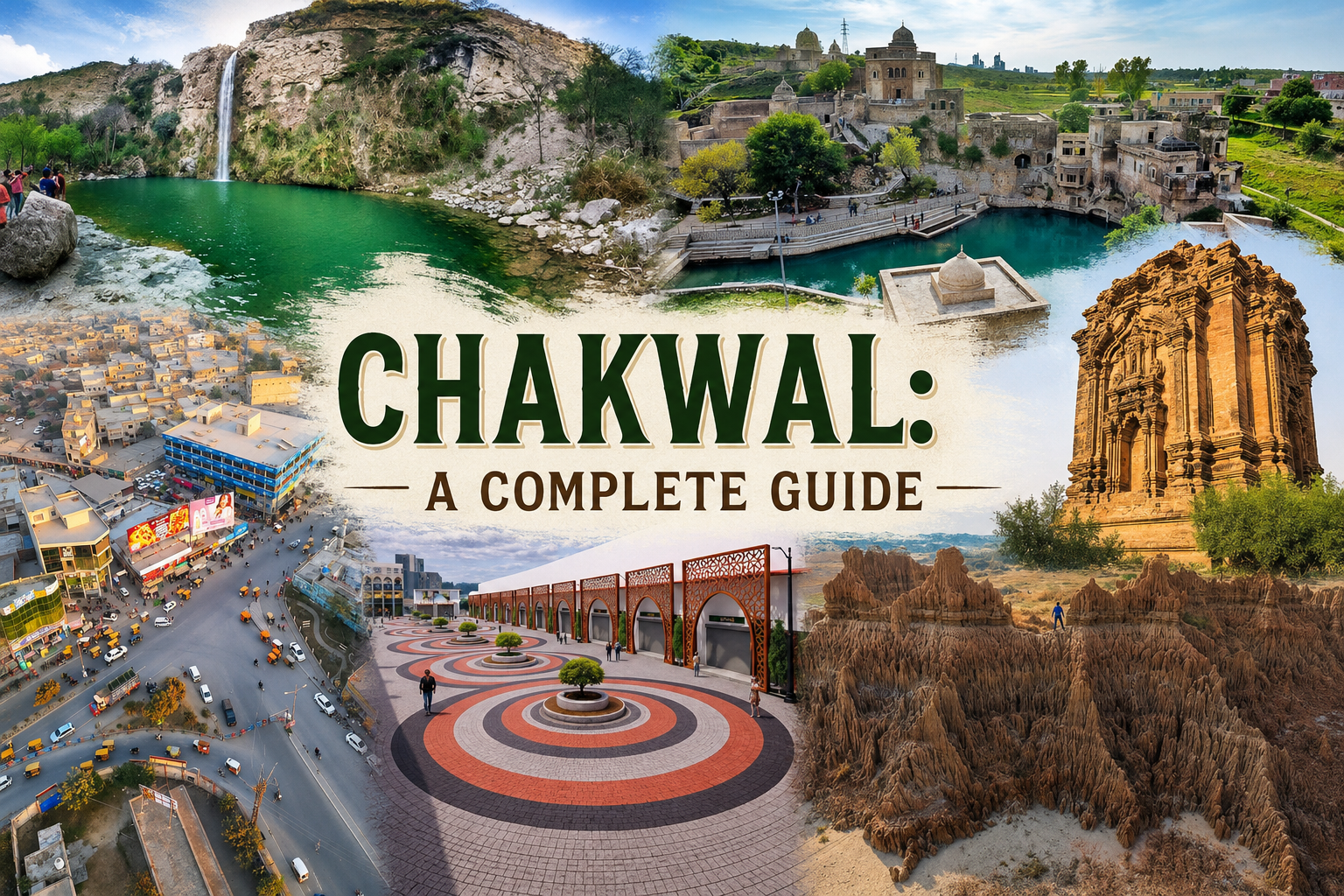
Chakwal is a city of hills, lakes and ancient temples on the Potohar Plateau. It is located among the rugged foothills of the Salt Range. It is the gateway to the sacred Katas Raj temples and the scenic valley of Kallar Kahar. It sends generations of its sons into the army. It rests a short drive from the great salt mines of Khewra. This guide covers Chakwal for the curious traveller. It explains the history, the martial culture, the sights, the property scene and how to visit.
This guide offers a general overview. Figures for the population vary between sources.
Quick answer: Chakwal is a city in the north of Punjab, on the Potohar Plateau around 90 kilometres south east of Islamabad. It was founded in 1525 by a Mair Minhas chief during the reign of Babur. It is located among the hills of the Salt Range and is known for its martial and agricultural traditions. It is the gateway to the ancient Katas Raj temples, the valley of Kallar Kahar and Malot Fort. A great Khewra Salt Mine is located nearby. Winter is the best time to visit.
About Chakwal
Chakwal is a historic city in the north of Punjab. It is located on the vast Potohar Plateau. Rugged hills of the Salt Range circle the city. It blends agriculture with a strong martial tradition.
A rocky and scenic setting surrounds the city. Potohar hillocks rise on every side. Rock strewn scenery and rugged hills define the district. Green farmland fills the valleys between them.
Its people are hardy and martial. Chakwal has a long tradition of military service. Many of its sons serve in the armed forces. This martial heritage is a great source of pride.
Local speech is distinctive. People here speak the Dhanni variety of Punjabi. This dialect marks the plateau country. It reflects the distinct identity of the area.
History of Chakwal
Chakwal has Mughal roots. It was founded in 1525 by a Mair Minhas chief. His name was Chaudhry Chaku Khan. It rose during the reign of the Mughal emperor Babur.
This area is far older, though. Its plateau holds ancient temples and forts. Katas Raj dates back many centuries. This deep heritage layers the whole district.
Babur passed through the land. This emperor encamped at Kallar Kahar on his march to Delhi. He described it as a charming place of good air. He had a rock throne cut there, the Takht e Babri.
British rule made it a tehsil. Chakwal was part of the Jhelum District under the British. It served as an administrative subdivision, holding the towns of Chakwal and Bhaun and their villages. It became a district in its own right in the modern era, drawing together the tehsils of Kallar Kahar, Choa Saidan Shah and Talagang.
This plateau bred famous villages. Dulmial is known across the country as the village with a gun. It sent hundreds of men to serve in the two world wars. This community earned a ceremonial cannon in recognition of its service.
Sights in Chakwal
Kallar Kahar is a scenic valley. It is located in the mountains of the Salt Range near the city. A saltwater lake fills the heart of the valley. Peacocks, gardens and museums add to its charm. Its own dedicated guide covers Kallar Kahar in detail.
Takht e Babri recalls the emperor. This rock throne was cut for Babur at Kallar Kahar. He addressed his army from it on his march. It remains a popular attraction in the valley.
Katas Raj is sacred and ancient. This Hindu temple complex surrounds a holy pond. Its oldest temples date back many centuries. A dedicated guide covers the site in detail.
Malot Fort crowns a hill. This ancient fort and temple rise near Kallar Kahar. They show a rare blend of Gandhara and Kashmiri styles. Its hilltop offers wide views across the plateau.
Lakes and waterfalls delight. Kallar Kahar Lake draws picnickers and birdwatchers. Neela Wahn waterfall and Swaik Lake reward a hike. These natural spots are a great draw.
Economy and property in Chakwal
Farming anchors the economy. Plateau farms grow wheat, groundnuts and other crops. Rain fed farming shapes the rural district. Livestock adds to the farming wealth.
Remittances play a great role. Many families have members in the army. Others work overseas in the Gulf and beyond. This income supports the local economy.
Minerals are an asset. Its Salt Range holds salt, coal and other minerals. A great Khewra Salt Mine is located in the wider area. Its own dedicated guide covers the mine in detail.
Crafts add to the trade. Family run potteries make traditional wares across the district. Bazaars trade in timber, textiles and local sweets. These crafts and markets round out the rural economy.
Property here is steady. Army heritage and remittances support the market. New housing schemes ring the city. A link to Islamabad lifts the market.
Visiting Chakwal
Come in winter. This plateau is hot and dry in summer. Cool, dry months are the finest season. They suit the temples and the outdoor sites.
Explore Kallar Kahar. This scenic valley is the great highlight. Its lake, peacocks and Takht e Babri await. It is an easy trip from the city.
Visit the ancient temples. Katas Raj is a sacred wonder. Malot Fort crowns a nearby hill. Dedicated guides cover these sites.
Hike the Salt Range. Its rugged hills reward the walker. Neela Wahn and Swaik Lake are fine spots. This scenery is dramatic and unspoilt.
Frequently asked questions
What is Chakwal famous for? Chakwal is famous for its rugged scenery on the Potohar Plateau and its strong martial tradition, sending many of its sons into the army. It is the gateway to the ancient Katas Raj temples a sacred Hindu pilgrimage site. It also opens onto the scenic valley of Kallar Kahar with its lake and peacocks. A historic Takht e Babri throne, cut for the emperor Babur, is a further draw along with the hilltop Malot Fort. A great Khewra Salt Mine is another attraction close by.
What is Kallar Kahar? Kallar Kahar is a scenic valley in the Salt Range around 25 kilometres from Chakwal city. It is famous for its saltwater lake and its peacocks. A historic Takht e Babri a rock throne, was cut for the emperor Babur when he camped here on his march to Delhi. He described it as a charming place of good air. This valley also holds gardens, shrines and the first fossil museum in the country. Its own dedicated guide covers it in detail.
What are the Katas Raj temples? Katas Raj is an ancient Hindu temple complex in the Salt Range of Chakwal District, near Choa Saidan Shah. Its temples surround a pond called Katas, regarded as sacred by Hindus. Its oldest temples date back many centuries. This site is linked to Hindu mythological texts such as the Mahabharata. It is an important pilgrimage destination and a unique example of the temple architecture of the area. Its own dedicated guide covers it fully.
Is Chakwal close to Islamabad? Indeed, Chakwal lies some 90 kilometers southeast of Islamabad on the Potohar Plateau and is easily accessible via road from the capital city. This close proximity makes the region a favorite weekend spot for tourists from both Islamabad and Rawalpindi. The connection with the capital also helps boost the real estate industry here. An advanced M2 Motorway passes through the district and links it with Lahore and the capital.
When is the best time to visit Chakwal? Winter and the cool, dry months are the best time to visit Chakwal, when the weather suits exploring the temples and outdoor sites. This plateau is hot and dry in summer. This cooler season is ideal for a trip to the scenic valley of Kallar Kahar, the ancient Katas Raj temples and the hilltop Malot Fort. Hiking in the rugged Salt Range, with spots such as Neela Wahn waterfall and Swaik Lake, is also pleasant then.
Plateau city of temples and soldiers
Chakwal is the rugged city of the Potohar Plateau. It is located among the rocky hills of the ancient Salt Range. It guards the sacred temples of Katas Raj and the throne of Babur at Kallar Kahar. It sends its sons to the army in every generation. It rests a short drive from the salt wonder of Khewra. Few cities blend such heritage with such scenery.
You may come to Chakwal for the temples, the lakes or the hills. This city rewards the visit either way. You can wander the sacred pond and shrines of Katas Raj. You can rest by the lake and the peacocks of Kallar Kahar. You can climb to the ancient fort at Malot. Come in winter and explore the plateau. Chakwal is the city of temples and soldiers.