Best Museums and Cultural Sites in Karachi: A Complete Guide
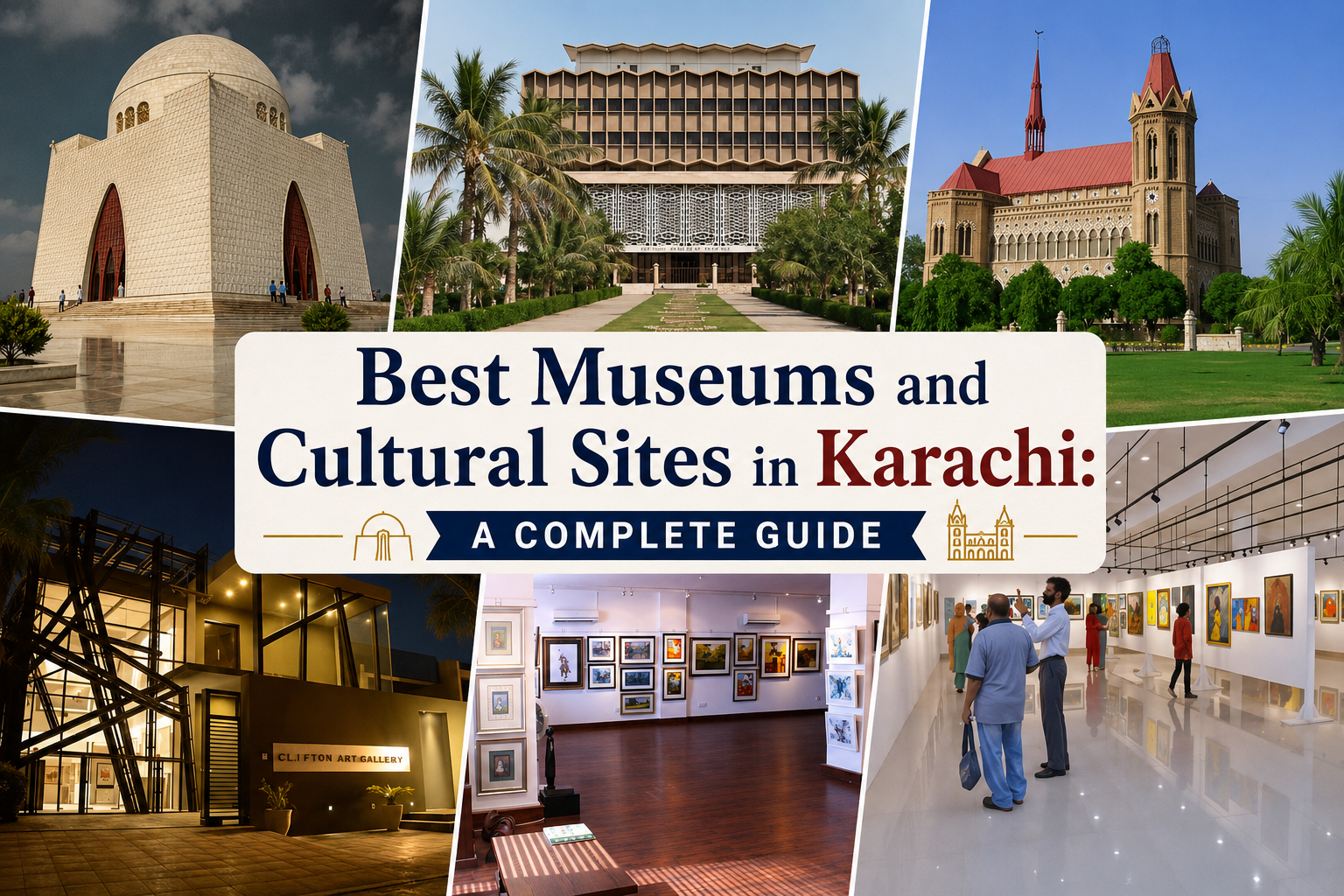
Karachi is a city of deep history. Its museums and cultural sites tell the story of two centuries. They run from the pink palace of Mohatta to the marble mausoleum of the founder. They hold ancient artefacts, colonial architecture and national memory. Heritage buildings also mark some of the most characterful districts in the city. This guide covers the best museums and cultural sites in Karachi for the curious traveller. It explains each site the history the property angle and how to visit.
This guide offers a general overview to help you plan a visit.
Quick answer: Best cultural sites in Karachi include the National Museum of Pakistan, with its ancient artefacts and Quran gallery along with Mohatta Palace is a grand 1920s museum of pink and yellow stone. Mazar e Quaid is the white marble mausoleum of the founder. Frere Hall combines a colonial hall with an art gallery. Quaid e Azam House and Wazir Mansion tell the story of the founder. The heritage of Saddar shapes the character of the old city. Winter is the best time to visit.
Cultural heart of Karachi
Karachi has grown over two centuries. Its museums trace this development. They range from ancient artefacts to national memory. They are a window into the past.
The city is rich in heritage. Colonial buildings line the old streets. Museums fill grand old mansions. Monuments mark the national story.
Heritage shapes the property character. The old districts carry colonial architecture. Areas such as Saddar hold this legacy. The dedicated guides to the areas cover this. Heritage adds character and appeal.
National Museum of Pakistan
This is the great museum of the country. The National Museum lies at Burns Garden. It moved to its present home in 1970. It is a must for history lovers.
The collection is vast. It holds tens of thousands of old coins. Sculptures and artefacts span the ages. The galleries cover the prehistoric the Gandhara and the Mughal eras. Original artefacts run from the stone age to modern times.
The Quran gallery is a treasure. It holds priceless manuscripts. Rare scripts fill the cases. Hindu and Buddhist artefacts feature too. This gallery is a highlight of the museum.
It is open most of the week. The museum welcomes visitors from Tuesday to Sunday. It closes on Mondays and public holidays. Parking is available on site.
Mohatta Palace
Mohatta Palace is a grand museum. It lies in Old Clifton. A Marwari businessman built it in 1927. It served as a palatial residence. It is now one of the finest museums in the city.
The building is a work of art. It is made of pink and yellow stone. Its design draws on Anglo Mughal architecture. Stone statues adorn the grounds.
The museum holds many galleries. Around forty four galleries fill the palace. They display artefacts from across the country. Art exhibitions run regularly. The collection spans many regions and eras.
It carries a rich history. It once housed the Ministry of Foreign Affairs. Fatima Jinnah the sister of the founder, later lived here. It became a museum in time.
Mazar e Quaid
This is the mausoleum of the founder. Mazar e Quaid holds the tomb of Muhammad Ali Jinnah. He was the founder of the country. It is the most prominent landmark in the city. It carries great national meaning.
The building is striking. It is made of white marble. A large dome crowns it. It rises above formal gardens in a powerful, solemn sight.
It is a place of pilgrimage. People come to pay their respects. A ceremonial guard keeps watch. It is open daily without charge. The late afternoon light suits it best.
Frere Hall
Frere Hall combines history and art. It was built in 1865. It once served as the town hall. It now houses an art gallery and a library. It is one of the most iconic buildings in the country.
The architecture is a colonial gem. It shows a Gothic Venetian Victorian style. Its ceilings are stunning. It lies within the gardens of Bagh e Jinnah. The dedicated guide to the parks covers the gardens.
The Sadequain Gallery is inside. It shows the work of the famous painter. Book fairs and exhibitions are held here. The building blends nature, history and art. It is a cultural hub of the old city.
Founder's houses and other sites
Quaid e Azam House tells the founder's story. It is also called Flagstaff House. Jinnah used it as a residence. It holds his personal belongings. The yellow limestone building is beautiful.
Wazir Mansion is his birthplace. This is where the founder was born. It is now a museum to his life. It lies in the old city. It is a place of national importance.
Empress Market is a colonial landmark. This grand market dates from the British era. Its architecture is a highlight of Saddar. Bustling stalls fill it daily.
Other museums add variety. The Pakistan Maritime Museum and the PAF Museum draw families. The State Bank Museum holds coins and art. Each offers its own window on the past.
Visiting the sites
Come in the cooler months. The heat is fierce for much of the year. The months from November to February are best. Mornings suit the indoor museums. The late afternoon suits the monuments.
Plan around the opening hours. Some museums close on Mondays. Others close on public holidays. Check before you travel. Weekdays are quieter than weekends.
Combine the sites by area. Many cultural sites cluster in Saddar. Frere Hall, Empress Market and the National Museum lie close. A walking route links several of them.
Respect the sites. The mausoleum is a solemn place. Dress modestly and behave respectfully. Photography rules vary between museums. Check the rules at each site.
Frequently asked questions
What is the best museum in Karachi? The National Museum of Pakistan is the great museum of the country. It holds tens of thousands of old coins, sculptures and artefacts. Its galleries span the prehistoric, Gandhara and Mughal eras. Its Quran gallery holds priceless manuscripts. Mohatta Palace is another highlight a grand 1920s palace of pink and yellow stone with around forty four galleries. The best choice depends on whether you want ancient artefacts or a historic palace setting.
What is Mohatta Palace? Mohatta Palace is a grand museum in Old Clifton, built in 1927 as a palatial residence for a Marwari businessman. It is made of pink and yellow stone in an Anglo Mughal style, with stone statues adorning the grounds. It once housed the Ministry of Foreign Affairs. Fatima Jinnah the sister of the founder, later lived there. Today it has around forty four galleries displaying artefacts from across the country and holds regular art exhibitions.
What is Mazar e Quaid? Mazar e Quaid is the mausoleum of Muhammad Ali Jinnah the founder of the country. It is the most prominent landmark in Karachi and carries great national meaning. Building is made of white marble with a large dome, rising above formal gardens. It is a place of pilgrimage where people come to pay their respects, watched over by a ceremonial guard. It is open daily without charge. The late afternoon light suits it best.
Which cultural sites in Karachi are linked to the founder? Several sites tell the story of Muhammad Ali Jinnah. Mazar e Quaid is his mausoleum and the most prominent landmark in the city. Quaid e Azam House also called Flagstaff House, was one of his residences and holds his personal belongings. Wazir Mansion in the old city is his birthplace and is now a museum to his life. Together these sites trace the life of the founder from his birth to his final resting place.
When is the best time to visit the cultural sites in Karachi? The best time is the cooler months, from November to February. The heat is fierce for much of the year, so this season is far more comfortable. Mornings suit the indoor museums, while the late afternoon light is best for monuments such as Mazar e Quaid. Some museums close on Mondays or public holidays, so check the opening hours before you travel. Weekdays are generally quieter than weekends.
Living memory of the city
Karachi is a city that holds its history close. Its museums and cultural sites trace two centuries of growth. They run from the ancient artefacts of the National Museum to the marble dome of the founder. They fill grand palaces and colonial halls. They also give the old districts their character and appeal. Few megacities carry their past so visibly.
You may come to the cultural sites for the history the architecture or the national story. The city rewards the visit either way. You can walk the galleries of the National Museum. You can admire the pink stone of Mohatta Palace. You can stand before the marble dome of Mazar e Quaid. Come in the cooler months and plan around the opening hours. The museums are the living memory of Karachi.