Bari Imam Shrine, Nurpur Shahan: History and Significance
The shrine of Bari Imam sits in the village of Nurpur Shahan, at the foot of the Margalla Hills in Islamabad. It is the resting place of a seventeenth century Sufi saint revered as the patron saint of the capital and one of the most visited spiritual sites in the region. Each year, hundreds of thousands of devotees come to the shrine, especially during its annual festival.
This article explains who Bari Imam was, the history and significance of the shrine and the area around it. Written for anyone getting to know Islamabad, it covers both the shrine itself and its setting in the historic village of Nurpur Shahan close to the heart of the capital.
The Bari Imam Shrine
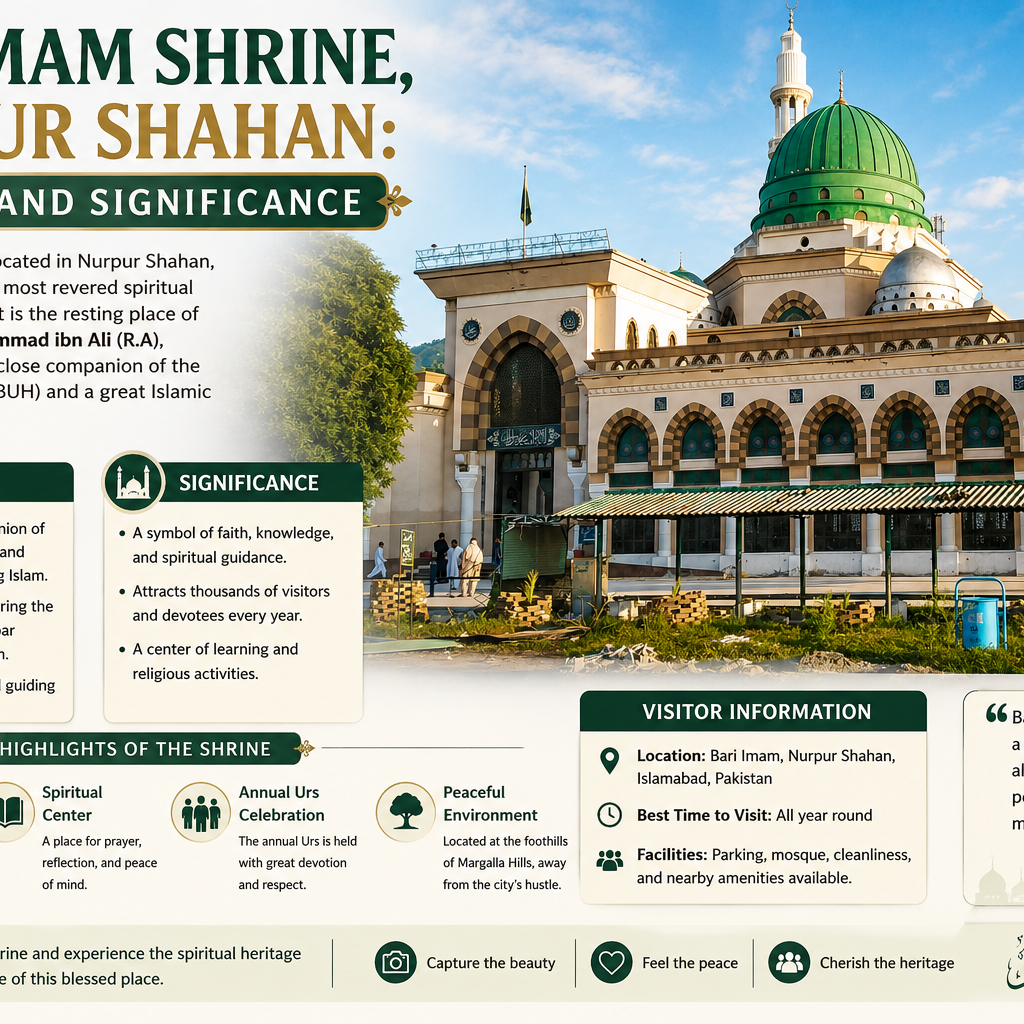
The Bari Imam Shrine is the tomb of Syed Abdul Latif Shah Kazmi, a Sufi saint of the seventeenth century known widely as Bari Imam or Bari Sarkar. He is venerated as the patron saint of Islamabad and his shrine has become one of the most important spiritual centres in the capital region.
The shrine stands in Nurpur Shahan, a village at the foothills of the Margalla Hills, close to the centre of Islamabad. Its position near the heart of the capital, yet in a village setting against the green hills, gives it a distinctive character. Devotees and visitors from all around the country and abroad visit this place. The visitors who come here belong to the Qadiri order of Sufism, to which Bari Imam belongs. The shrine is actually a mausoleum where the tomb of the saint lies, and it is decorated with silver and mirrors. It was originally built in the seventeenth century and has been renovated many times over the centuries. Today it is maintained by the government and it functions as both a place of worship and a landmark of the capital.
Around the shrine, a lively area has grown up with a bazaar outside the complex and a free community kitchen, known as langar, that offers meals to all visitors. This blend of a sacred tomb and bustling bazaar and the tradition of communal food gives the shrine its particular atmosphere.
Quick answer: The Bari Imam Shrine in Nurpur Shahan, Islamabad, is the tomb of the seventeenth century Sufi saint Syed Abdul Latif Shah Kazmi, revered as the patron saint of the capital. Originally built in the seventeenth century and set at the foot of the Margalla Hills, it is one of the region's most visited spiritual sites.
Who was Bari Imam?
Bari Imam, whose full name was Syed Abdul Latif Shah Kazmi, lived from 1617 to 1705. He was a Sufi saint and ascetic of the Qadiri order, one of the main traditions of Islamic mysticism and he became one of the most revered spiritual figures in the region.
He was born in a village in the Chakwal area of Punjab, into a religious family. While he was still a child, his family moved to the area now known as Aabpara in Islamabad, where his father worked as a farmer. As a young man, he helped his father with farming and grazing animals before turning fully towards a spiritual life.
In his search for religious knowledge, Bari Imam travelled widely. He is said to have journeyed to places across Central Asia and the wider Islamic world and to have performed the pilgrimage to Mecca and Medina. He studied various disciplines and held discussions with scholars of different schools of thought, deepening his learning before returning to settle in the area around Nurpur Shahan.
His teachings centred on peace, love and harmony, in keeping with the Sufi tradition. According to the accounts, the area where he settled was once known as a dangerous place, troubled by bandits who preyed on the caravans passing through. Bari Imam is credited with transforming the area through his message of tolerance and devotion and the place came to be known as Nurpur, a name reflecting light and change. His teachings were passed down largely through oral tradition rather than written works and he is remembered in the devotional music and stories of the region.
The history of the shrine
The shrine at Nurpur Shahan grew from the veneration of Bari Imam after his death in 1705. The saint had gained a large following in his lifetime and his resting place became a focus of devotion for those who revered him.
The original shrine is said to have been built by the Mughal Emperor Aurangzeb, who held Bari Imam in great esteem. The Mughal connection gave the shrine early importance and it became established as a significant spiritual site in the region. The silver mirrored mausoleum that marks the saint's grave dates from this early period, though it has been changed and renovated many times since.
Over the centuries, the shrine was renovated during different eras, including in later periods and it is now maintained by the government of Pakistan. Each renovation has added to or altered the structure, but the site has remained a continuous place of pilgrimage throughout. Its long history, stretching back to the Mughal period, is part of what gives the shrine its standing.
The shrine has also been the setting for its famous annual festival, the urs which commemorates the death anniversary of the saint. For centuries, this festival has drawn enormous crowds and in some years the attendance has reached extraordinary numbers. The urs remains one of the largest religious gatherings in the capital region.
The architecture of the shrine
The architecture of the Bari Imam Shrine blends traditional South Asian and Islamic styles, creating a building that is both a place of worship and a visual landmark. The design reflects the Mughal origins of the shrine and the later renovations it has undergone.
At the centre of the shrine is the mausoleum housing the saint's tomb, topped by a dome in the Mughal style. The building is known for its silver and mirror decoration which gives it a distinctive shine. There are minarets or towers surrounding the main building, while the building can be accessed through a large gate which is adorned with calligraphy and designs.
The interior of the shrine has frescoes, Islamic calligraphy, and chandeliers in order to create an ambiance appropriate for worship. The saint's tomb is covered with a cloth and devotees come to pay their respects, often scattering rose petals. An open courtyard within the complex allows worshippers and visitors to gather.
The decoration draws on Sufi symbols and traditional motifs and the overall effect combines the grandeur of Mughal style architecture with the intimate character of a place of pilgrimage. The building's design with its dome, gateway and decorated interior, makes it a recognisable landmark at the foot of the Margalla Hills.
The urs festival and the shrine's significance
The most important event at the shrine is the annual urs, the festival marking the death anniversary of Bari Imam. Held around May, the urs is a major celebration that draws devotees from across the country and beyond, filling Nurpur Shahan with pilgrims for several days.
The urs is a vibrant occasion, featuring devotional music, poetry and gatherings with the qawwali singing of the Sufi tradition at its heart. Devotees come to honour the saint, offer prayers at his grave and take part in the communal atmosphere. The scale of the festival, drawing huge crowds each year, makes it one of the largest religious gatherings in the capital region.
Beyond the festival, the shrine holds year round significance. It draws a steady stream of devotees who come to pray and pay their respects and Thursday evenings are traditionally a busy and festive time. The langar or community kitchen that offers free meals to all who visit irrespective of their background is an integral part of the shrine itself.
There is much more about the significance of the shrine than religion. As the resting place of the patron saint of Islamabad, it is a landmark of the capital's spiritual and cultural life. It represents a tradition of Sufism that has shaped the region for centuries and it remains a living centre of devotion, drawing people seeking spiritual comfort amid the modern city.
Places near the Bari Imam Shrine
The Bari Imam Shrine sits in Nurpur Shahan, at the foot of the Margalla Hills, in a location that is both close to the heart of Islamabad and surrounded by natural beauty. The area around it holds several important places which adds to its appeal and makes it easy to combine with other visits.
The shrine lies near the centre of the capital. It sits close to the government district, not far behind the main state buildings and within a short drive of central Islamabad and the Aabpara area. This central position means the shrine, despite its village setting, is well connected to the rest of the city.
The setting at the foot of the Margalla Hills is one of the shrine's features. A well known hiking trail leads from the area up to Loai Dandi, a cave in the Margalla Hills where Bari Imam is said to have meditated. This makes the shrine a starting point for those wanting to combine a visit with a walk in the hills. The green spaces of the Margalla Hills National Park surround the area and the nearby Lake View Park and Rawal Lake are within reach.
The shrine is reachable by road from across the twin cities and it sits within a reasonable distance of the airport and the railway station. For the wider area, Nurpur Shahan and the surrounding sectors benefit from their position near the hills, the shrine and the centre of the capital. Proximity to the Margalla Hills, the green spaces and a landmark of this significance adds to the character of this part of Islamabad and the shrine is one of the features that defines the area.
Frequently asked questions
Where is the Bari Imam Shrine located? The shrine is in Nurpur Shahan, a village at the foot of the Margalla Hills in Islamabad, close to the centre of the capital and the government district. It sits within a short drive of central Islamabad and the Aabpara area.
Who was Bari Imam? Bari Imam, whose full name was Syed Abdul Latif Shah Kazmi, was a Sufi saint of the Qadiri order who lived from 1617 to 1705. Revered as the patron saint of Islamabad, he is remembered for his teachings of peace, love and harmony.
Who built the Bari Imam Shrine? The original shrine is said to have been built by the Mughal Emperor Aurangzeb, who revered the saint, in the seventeenth century. It has been renovated many times since and is now maintained by the government of Pakistan.
What is the urs festival? The urs is the annual festival marking the death anniversary of Bari Imam, held around May. It draws huge crowds of devotees for several days with devotional music, poetry and prayers and is one of the largest religious gatherings in the capital region.
What is the langar at the shrine? Langar is a free kitchen within the shrine that provides basic food to all people coming to the place irrespective of their backgrounds.
What places are near the Bari Imam Shrine? The shrine sits at the foot of the Margalla Hills, near the government district and central Islamabad. A hiking trail leads to the Loai Dandi cave in the hills and the Margalla Hills National Park, Lake View Park and Rawal Lake are within reach.
Final thoughts
The Bari Imam Shrine is one of the most significant spiritual landmarks of Islamabad. As the resting place of Syed Abdul Latif Shah Kazmi, the seventeenth century Sufi saint revered as the patron saint of the capital, it holds a special place in the religious and cultural life of the region.
For those getting to know Islamabad, the shrine offers a window into the Sufi heritage that has shaped the area for centuries, from its Mughal origins to its enormous annual urs festival. Its setting in the village of Nurpur Shahan, at the foot of the Margalla Hills yet close to the heart of the capital, gives it a character that blends the sacred, the historic and the natural. Whether you visit the shrine for its spiritual significance, its history, its architecture or its setting near the hills, it remains one of the defining landmarks of Islamabad and a living centre of devotion at the foot of the Margalla Hills.