Attock: A Complete Guide
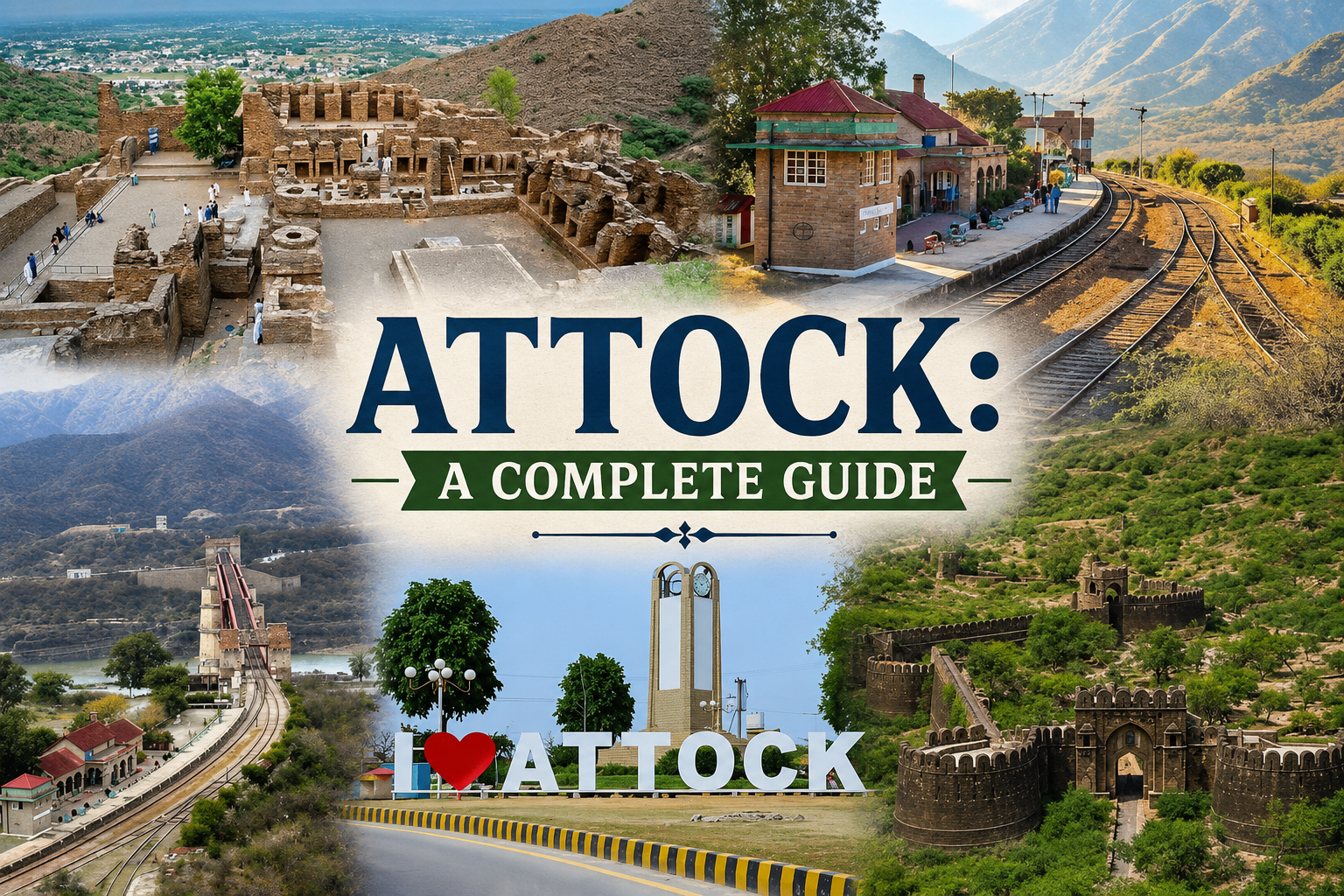
Attock is the last great city of Punjab before the frontier. It is located on the Indus River at the very edge of the province. It guards a mighty Mughal fort raised by Akbar to defend the river crossing. It overlooks the dramatic meeting of the Indus and the Kabul rivers. It is the gateway between Punjab and Khyber Pakhtunkhwa. This guide covers Attock for the curious traveller. It explains the history the fort the rivers the sights the property scene and how to visit.
This guide offers a general overview. Figures for the population vary between sources.
Quick answer: Attock is a city in the north west of Punjab, on the bank of the Indus River, near its confluence with the Kabul River. It was long known as Campbellpur under British rule and took the name Attock in 1978. It is famous for the great Attock Fort, built by the Mughal emperor Akbar in the 1580s to guard the river crossing. It is the last city of northern Punjab and a gateway to Khyber Pakhtunkhwa and Central Asia. Winter is the best time to visit.
About Attock
Attock is a historic frontier city in north west Punjab. It is located on the bank of the Indus River. It is the last city on the northern edge of Punjab. It is a gateway to Khyber Pakhtunkhwa and beyond.
A strategic and dramatic setting defines the city. It rests high on the Pothohar Plateau above the Indus. It is located around 80 kilometres from Rawalpindi and 100 from Peshawar. Its scenery is dry, stony and rugged.
Two rivers define the city. Indus waters flow past its edge. Kabul River joins it here after its long journey from Afghanistan. This confluence is a great natural spectacle.
It is a corridor to Central Asia. Attock is the eastern end of the Kabul Attock route. Armies and caravans have passed through here for centuries. Nature carved this corridor through the mountains.
History of Attock
This crossing is ancient. Attock is located at the great crossing point of the Indus. A fortress has guarded the passage since before Alexander the Great. Chinese and Arab travellers wrote of the crossing long ago.
Akbar built the great fort. This Mughal emperor recognised the strategic value of the site. He built the Attock Fort between 1581 and 1583. It secured the passage for his campaigns into Central Asia.
Empires fought over the crossing. This fort passed from the Mughals to the Durrani Afghans. Sikhs took it then the British. Each empire prized the gateway to the frontier.
British rule built Campbellpur. Engineers brought the railway and a permanent bridge over the Indus in 1880. They founded a new city and named it Campbellpur. They organised the district in 1904.
Attock regained its old name. Campbellpur was renamed Attock in 1978. This name reflects the historic Mughal era crossing. An old town by the river is still called Attock Khurd.
Attock Fort and the rivers
Attock Fort is the great landmark. Akbar built it to guard the passage of the Indus. Its walls run around 1,600 metres in length. Four great gates pierce the walls.
This fort has a long history. It served the Mughals afghans, Sikhs and British in turn. It protected the routes between Central Asia and South Asia. It is one of the great forts of the country.
A military base occupies the fort today. It serves as an army headquarters, closed to the general public. Visitors can still admire it from the bridge and the road.
This confluence is a spectacle. Indus and Kabul waters meet just below the fort. They mingle in a dramatic sweep. A view from the Attock Bridge is unforgettable.
A bridge frames the view. Grand Trunk Road crosses the Indus here. From the bridge the vast delta of the Indus opens out. Kabul River joins from the other side.
Sights and surroundings of Attock
Attock Khurd is the old town. This little town by the river holds the fort. It preserves the old colonial railway heritage. It is a window on the frontier past.
Hasan Abdal is located in the district. This historic town holds the Sikh shrine of Panja Sahib. It is a great pilgrimage site for Sikhs. Its own dedicated guide covers the shrine.
River scenery is a great draw. Indus and Kabul waters frame the city. Boating and river views reward the visitor. This rugged plateau adds to the drama.
Surrounding towns add interest. Hazro, Fateh Jang and Pindi Gheb dot the district. Each has its own character and heritage. They reflect the frontier culture of the area.
Economy and property in Attock
Farming anchors the economy. Plateau farms grow wheat and sugarcane. Rain fed and canal farming shape the district. Livestock adds to the rural wealth.
Remittances play a great role. Many families have members working overseas. This income flows back to the district. It supports the local economy.
Industry and refining feature. A major oil refinery operates in the district. Small scale industry adds to the base. This strategic location supports trade.
Property here is steady. A link to Rawalpindi and Islamabad supports the market. New housing schemes ring the city. This gateway location lifts the market.
Visiting Attock
Come in winter. This plateau is hot in summer. Winter months from November to February are the finest season. Weather is cool and pleasant then.
See the Attock Fort and bridge. This great fort is the highlight, viewed from outside. A confluence of the rivers is unforgettable. Attock Bridge frames the whole scene.
Visit Hasan Abdal. Its shrine of Panja Sahib is a place of pilgrimage. A dedicated guide covers it in detail. This historic town rewards a visit.
Enjoy the rivers. A meeting of the Indus and the Kabul is a spectacle. Boating and river views are a pleasure. This scenery is dramatic and unspoilt.
Frequently asked questions
Why is Attock famous? Attock is famous for its great fort and its strategic position on the Indus River. Built by the Mughal emperor Akbar between 1581 and 1583 the Attock Fort guarded the vital crossing of the Indus and the route into Central Asia. Attock overlooks the dramatic confluence of the Indus and Kabul rivers, best seen from the Attock Bridge. As the last city of northern Punjab, it is a historic gateway to Khyber Pakhtunkhwa and the frontier.
Can you visit the Attock Fort? Attock Fort is a 16th century Mughal fortress on the bank of the Indus, built by Akbar to guard the river crossing. Its walls run around 1,600 metres and are pierced by four great gates. Today, however the fort serves as a military headquarters, so the general public cannot enter it. Visitors can still admire the fort from the Attock Bridge and the approach road. From there they enjoy the dramatic view of the rivers below.
Why was Attock called Campbellpur? Under British colonial rule the British founded a new city near the Indus and named it Campbellpur after Sir Colin Campbell a commander in chief of British forces. They brought the railway and built the first permanent bridge over the Indus in 1880. They organised the district in 1904. Campbellpur was renamed Attock in 1978, reflecting the historic Mughal era name of the crossing. An old town by the river is still called Attock Khurd.
What is the confluence at Attock? A confluence at Attock brings together two great rivers the Indus and the Kabul. This Kabul River begins near Kabul in Afghanistan and journeys around 700 kilometres before falling into the Indus at Attock. Its waters mingle in a striking sweep just below the Attock Fort. A view from the Attock Bridge on the Grand Trunk Road, taking in the vast delta of the Indus and the incoming Kabul River, is unforgettable.
When is the best time to visit Attock? Winter, from November to February, is the best time to visit Attock, when the weather is cool and pleasant. This plateau is hot in summer. Winter suits a visit to the great Attock Fort, viewed from outside. It is also ideal for the dramatic confluence of the Indus and Kabul rivers seen from the Attock Bridge. It is also a good season for a trip to nearby Hasan Abdal and its Sikh shrine of Panja Sahib along with the river scenery.
Frontier city on the Indus river
Attock is the frontier city where Punjab meets the mountains. It is located on the Indus at the edge of the province. It guards the mighty fort that Akbar raised to hold the crossing. It watches the Indus and the Kabul rivers merge below its walls. It opens the gateway to Khyber Pakhtunkhwa and Central Asia. Few cities hold such a strategic and dramatic place.
You may come to Attock for the fort the rivers or the frontier. This city rewards the visit either way. You can admire the great fort of Akbar from the bridge. You can watch the Indus and the Kabul rivers meet below. You can visit the Sikh shrine at nearby Hasan Abdal. Come in winter and stand at the gateway of the north. Attock is the frontier city on the Indus.