Anarkali Bazaar Lahore: A Guide to the Historic Market
Anarkali Bazaar is located on The Mall in the heart of Lahore. It is one of the oldest surviving markets in South Asia. Anarkali Bazaar dates back at least two centuries and takes its name from a nearby tomb. It is divided into Old Anarkali, famous for its food. The other half is New Anarkali, known for its clothing and handicrafts. Its narrow lanes are packed with shops selling textiles, jewellery, garments and much more. For anyone getting to know Lahore, Anarkali Bazaar captures the true spirit of the traditional market life of the city.
This guide explains what Anarkali Bazaar is, its history, its two sections and its famous food. It covers both the bazaar itself and its setting among the landmarks of central Lahore.
Anarkali Bazaar
Anarkali Bazaar is a major traditional market in Lahore. It is situated in the region that extends from the south of the Lohari Gate of the Walled City across The Mall. Anarkali also serves as a neighbourhood of the city. Anarkali Bazaar is one of the oldest surviving markets in South Asia, dating back at least 200 years. Some accounts suggest the market is far older still.
Anarkali Bazaar takes its name from a nearby tomb. This is the tomb thought to belong to a woman known as Anarkali, whose name means a pomegranate bud. A legend surrounds her name, though historians dispute its accuracy. The bazaar grew around the tomb and the surrounding area became known by her name. The tomb itself now houses the Punjab Archives.
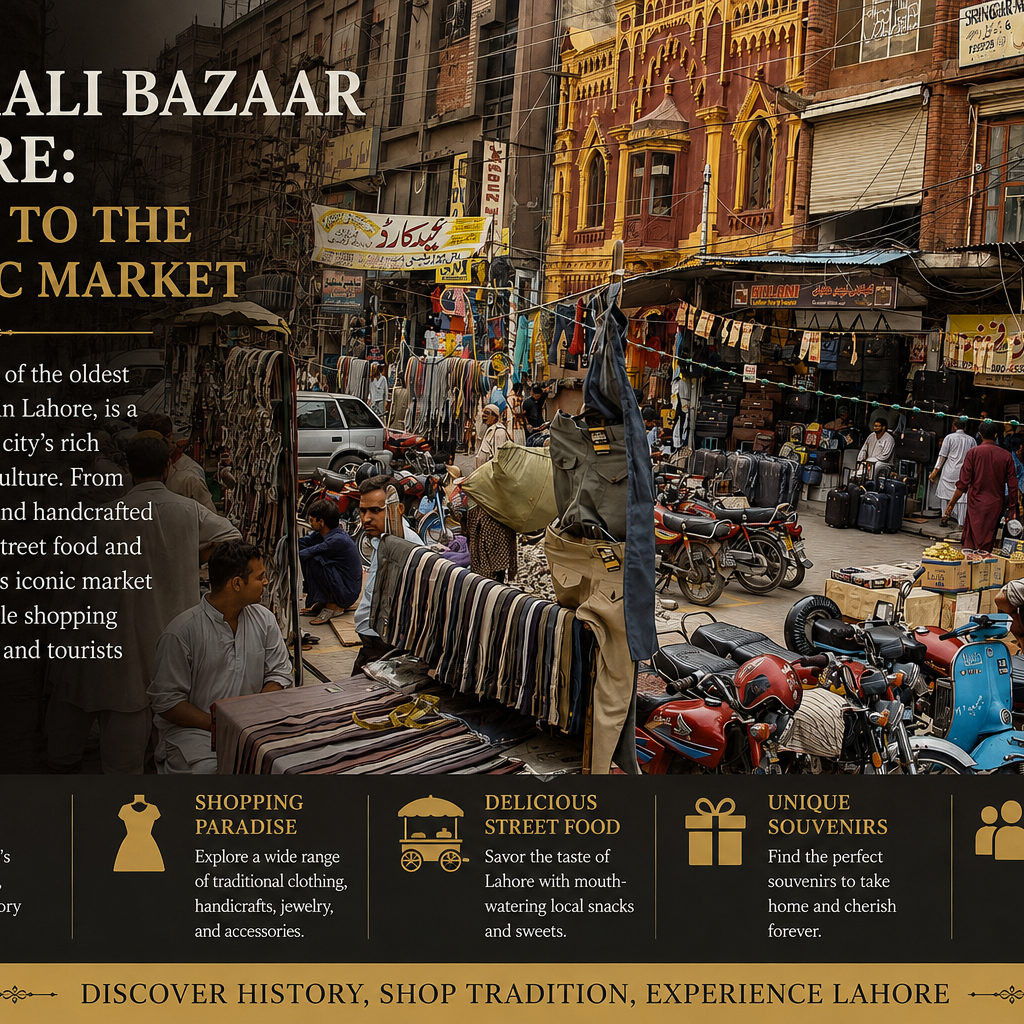
Anarkali Bazaar is a dense and busy market. Its narrow lanes are lined with shops selling textiles, garments, jewellery, handicrafts and many other items. It is famous for its authentic look and atmosphere. It captures the traditional bazaar life of the city in a way that the modern malls do not. It is known for its value for money, with prices lower than the more modern shopping areas such as Liberty and Gulberg.
Anarkali Bazaar is divided into two main sections. These are the Old Anarkali Bazaar and the New Anarkali Bazaar. Each has its own character and specialities. Old Anarkali is noted for its traditional food. New Anarkali is known for its clothing, handicrafts and embroidery. Together they make Anarkali one of the most important and characterful markets in the city.
Quick answer: Anarkali Bazaar is one of the oldest surviving markets in South Asia, located on The Mall in central Lahore. Dating back at least 200 years, it is named after a nearby tomb. It is divided into two parts. Old Anarkali is famous for food. New Anarkali is known for clothing and handicrafts. Anarkali Bazaar is known for value shopping.
History and the legend
The history of Anarkali Bazaar reaches back centuries. The bazaar is one of the oldest surviving markets in the whole of South Asia. It dates back at least 200 years. Some historians claim the market has existed for far longer, even up to a thousand years. This long history makes the bazaar a living link to the past of the city.
Anarkali Bazaar takes its name from a famous legend. According to popular lore, Anarkali was a courtesan or slave girl in the Mughal court. The legend says she had a romance with Prince Salim, the son of the Emperor Akbar, who later became the Emperor Jahangir. The story tells that Akbar had her entombed alive as punishment for the affair. This poignant tale of love and tragedy has given the market an air of mystique.
The legend is a matter of historical debate. Some historians have raised doubts about the accuracy of the story. There is no mention of Anarkali in the autobiography of Jahangir or in other royal accounts from that period. The tomb associated with her name is a real and grand structure. The identity of the person buried there is uncertain. The name Anarkali came to be used for the neighbourhood and streets near the tomb over the years.
Anarkali Bazaar developed around this historic core. According to some accounts, Prince Salim wished to keep the memory of the place alive. He is said to have laid the foundation of the bazaar so that people would remember the area and its history. The market grew and adapted through the Mughal and British eras. Many of the shops have been run by the same families for generations. Anarkali Bazaar was listed on the World Monuments Watch in 2020 to highlight the need to preserve its endangered heritage.
Old Anarkali and the food
Old Anarkali is the section of the bazaar most famous for its food. This part of the bazaar is a haven for food lovers. It is home to a celebrated food street and many traditional resturants. These serve an array of local delicacies that capture the essence of the food culture of Lahore.
The Old Anarkali Food Street is one of the best known food spots in the city. It is quiet during the day but comes alive after sunset. The street then fills with people. The lanes are lined with tables and food stalls. The aroma of spices and grilling meat fills the air in Anarkali bazar attracting people. It is one of the best places in the city to grab a meal and watch the world go by.
The food on offer is rich and varied. The street and the surrounding lanes serve everything from siri paye and nihari to karahi and barbecue. Traditional snacks such as dahi baray, fruit chaat and fresh fruit juices are popular. Famous old establishments have served here for generations. These include historic sweet shops and bakeries, some dating back over a century, such as a bakery established in 1879. These long standing eateries are part of the character of the area.
The food of Anarkali reflects the wider food culture of the city. Lahore is famous for its love of food. Anarkali is one of its great centres. The dishes are generally affordable. The variety is remarkable. Many of the dishes are meant to be shared. The hospitality of the area is warm and welcoming. This makes a meal at Old Anarkali one of the essential experiences of the city.
New Anarkali and the shopping
New Anarkali is the section of the bazaar most famous for its shopping. This part is a paradise for shoppers. It offers a wide range of products, from traditional garments and jewellery to handicrafts and home decor. It is especially popular with women looking for clothing, bridal wear and accessories.
The section contains several distinct markets within it. These include the Bano Bazaar, the Dhani Ram Road, the Jan Muhammad Road and the Paan Gali, among others. The Bano Bazaar is especially famous. It has long been popular with women shoppers for clothes, bangles, henna, shoes and accessories. It offers a comfortable and welcoming space for shopping. Each of these markets has its own specialities.
The shopping is known above all for its value. Anarkali offers good quality at prices well below the more modern markets. A complete traditional outfit can cost a fraction of the price at the malls of Liberty or Gulberg. The bazaar is a great place for bridal wear, embroidered fabrics, lawn suits, traditional footwear and jewellery. Bargaining is common and expected, so shoppers can often lower the price. Most shops prefer cash payment.
Anarkali Bazaar reflects the religious and cultural diversity of the city. It is home to the very old Valmiki Mandir, a Hindu temple, near the Neela Gumbad landmark with its blue dome. A church also stands in the area. The tombs of Anarkali and of Sultan Qutb ud Din Aibak, an early ruler of the region, are also located here. These sites give the bazaar a rich heritage alongside its shopping and food.
Location and significance
Anarkali Bazaar is situated in the heart of central Lahore on The Mall. This central location places it among the major landmarks and institutions of the city. Anarkali Bazaar sits on The Mall near the Lahore Museum, between Mayo Hospital and the old campus of the University of the Punjab. This makes it one of the most accessible markets in the city.
The setting places the bazaar within a rich cluster of landmarks. The Lahore Museum stands opposite the bazaar. The old campus of the University of the Punjab, the Government College University, the National College of Arts and the King Edward Medical University are all nearby. Mayo Hospital and Sir Ganga Ram Hospital serve the central area. The Walled City with the Lahore Fort and the Badshahi Mosque lies a short distance to the north. This concentration of institutions makes the area a hub of learning, healthcare and heritage.
Anarkali Bazaar is very important to Lahore because it is one of the oldest bazaars existing in South Asia. It is an example of a living museum which tells the story of Lahore. It represents the bazaar culture which gives Lahore its flavor. It is a place where both the rich and the poor, the old and the young gather. It symbolizes the culture and the trade of the city all in one busy area.
It offers an authentic experience of the traditional life of the city, in contrast to the modern malls. Its heritage, its food and its value shopping draw visitors from across the city and beyond. For anyone getting to know Lahore, Anarkali Bazaar is one of the places that captures the true heart and soul of the city.
Visiting Anarkali Bazaar
Anarkali Bazaar is one of the most rewarding places to visit in Lahore for shopping, food and atmosphere. It offers an authentic experience of the traditional market life of the city. It suits shoppers, food lovers and anyone wanting to experience the culture of the city.
Anarkali Bazaar is generally open through the day into the evening, including on Sundays. The best time to visit is the late afternoon and evening. Shoppers can browse New Anarkali and then enjoy dinner in Old Anarkali. The evening brings the food street and the lit up shops to life. Weekdays are less crowded than weekends and offer better bargaining. A visit of two to three hours allows time to shop and eat. Serious shopping needs longer.
Anarkali Bazaar is reached easily as it is located on The Mall in central Lahore. It is served by the Anarkali station of the Metro Bus. This station drops passengers at the market. The Lahore Railway Station is only a few minutes away by rickshaw. Taxis and ride hailing services also serve the area. Parking can be tough owing to the crowds, and therefore a taxi or public transport would be the ideal mode of travel.
The period between October and March forms the best period for visiting since the congested streets can become extremely hot during summer. Negotiation is part of the shopping experience, and one has to bargain for prices. It is wise to carry cash and small change. The bazaar is crowded, so visitors should keep their belongings safe and be mindful of pickpockets. A visit combines well with the Lahore Museum and the other landmarks of The Mall.
Places near Anarkali Bazaar
Anarkali Bazaar is situated within reach of many landmarks and useful places in central Lahore. This helps visitors plan a fuller trip. The Lahore Museum stands opposite the bazaar. The General Post Office and the other colonial buildings of The Mall are nearby. The old campus of the University of the Punjab, the Government College University and the National College of Arts are close by.
Mayo Hospital, Sir Ganga Ram Hospital and the King Edward Medical University serve the central area. The Walled City with the Lahore Fort and the Badshahi Mosque lies a short distance to the north. Data Darbar, the shrine of Data Ganj Bakhsh, is within reach. The Fort Road food street and the tomb of Allama Iqbal are near the old city. These connections make the bazaar an easy part of a tour of central Lahore.
Frequently asked questions
Where is Anarkali Bazaar located? Anarkali Bazaar is located on The Mall in central Lahore, near the Lahore Museum, between Mayo Hospital and the old campus of the University of the Punjab. It extends from the south of the Lohari Gate of the Walled City across The Mall.
Why is it called Anarkali Bazaar? Anarkali Bazaar is named after a nearby tomb thought to belong to a woman known as Anarkali, whose name means a pomegranate bud. A legend says she was a courtesan who had a romance with Prince Salim, the son of the Emperor Akbar, though historians dispute the accuracy of the story.
What are Old Anarkali and New Anarkali? Anarkali Bazaar is divided into two sections. Old Anarkali is famous for its traditional food and its food street. New Anarkali is known for its clothing, jewellery, handicrafts and embroidery, with markets such as the Bano Bazaar popular with women shoppers.
What can you buy at Anarkali Bazaar? Anarkali Bazaar sells textiles, traditional garments, bridal wear, lawn suits, jewellery, bangles, footwear, handicrafts and home decor. It is known for good value, with prices lower than the modern markets. Bargaining is common and expected. Most shops prefer cash.
What food is famous at Anarkali? Old Anarkali is famous for its food street and traditional resturants. Popular dishes include siri paye, nihari, karahi and barbecue, along with snacks such as dahi baray, fruit chaat and fresh juices. Historic sweet shops and bakeries, some over a century old, serve here.
How do you get to Anarkali Bazaar? The bazaar is located on The Mall in central Lahore. It is served by the Anarkali station of the Metro Bus. The Lahore Railway Station is a few minutes away by rickshaw. Taxis and ride hailing services also serve the area, though parking can be difficult given the crowds.
Anarkali Bazaar is one of the great historic markets of Lahore and one of the oldest surviving bazaars in South Asia. Dating back at least two centuries and named after a tomb wrapped in legend, it captures the traditional market life of the city in a way the modern malls cannot. Its narrow lanes, packed with shops selling textiles, garments, jewellery and handicrafts, offer an authentic and characterful shopping experience.
Anarkali Bazaar brings together shopping, food and heritage in one busy market. Old Anarkali serves some of the best traditional food in the city, its food street coming alive each evening, while New Anarkali offers value shopping loved especially by women. Its central location on The Mall places it among the museums, universities and hospitals of the city, at the heart of learning, heritage and everyday life. It remains one of the essential experiences of Lahore and a market that captures the true heart of the city whether you visit Anarkali Bazaar for its shopping, its food, its history or simply its lively atmosphere.